USA
Explore ²¨²¨ÊÓƵav's research.

As the United States marks its 250th anniversary, national pride is at its lowest point in ²¨²¨ÊÓƵav's 25-year trend.

Two-thirds of Americans say gas prices are causing financial hardship, with nearly six in 10 driving less and close to half altering summer travel plans.

More than three in four U.S. adults say the founders would be disappointed with how the country turned out, though a majority still say it has made progress.
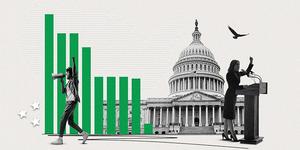
Most Americans see courage as vital to America's future. Yet many say that it comes with costs — personal or political — for those who act on it.

At least one in three Gen Zers in the U.S. are struggling to find meaning or purpose in life, a pattern most pronounced among young adults.

Four in 10 U.S. adults plan to watch at least some of the World Cup soccer tournament, similar to the last time the U.S. hosted the event in 1994.

Americans' approval of recent U.S. military action in Iran was lower than support for other U.S. military actions since the 1980s.

Most Americans still personally believe in the American Dream and consider it worth striving for, but fewer believe the country is delivering on it.

Americans' attitudes about abortion have shifted very little over the past four years.

Most Americans plan to mark the nation's 250th anniversary through gatherings, community activities and reflection, highlighting broad pride in the past and optimism ahead.

Americans still say that having more religious people would be positive for U.S. society, but fewer hold this view than did in 2013.

Depending on their platform, social media users have different views on democracy, national identity and citizens' power.

Americans' beliefs that birth control and gambling are morally acceptable have fallen to record lows, with independents driving much of the decline.
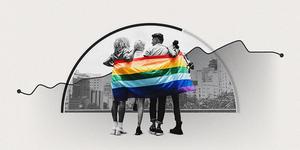
Since 2021, fewer Americans have said that gay or lesbian relations and changing one's gender are morally acceptable and have favored legal same-sex marriage.

A new Edward Jones and ²¨²¨ÊÓƵav study finds one in six U.S. adults and one in eight Canadian adults are "financially fulfilled."
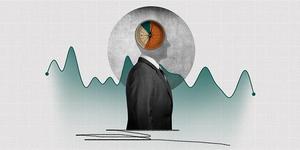
A record-high 56% of Americans rate moral values as poor, and 80% say they are getting worse, with both readings up by double digits since last year.

Most teachers use AI at work, but few receive formal guidance, leaving educators to navigate decisions and new technology without clear direction.

Economic confidence is the weakest it has been since 2022, driven by growing pessimism about current conditions and the economy's direction.

About one in four Americans frequently (10%) or occasionally (17%) use installment plans for online purchases they make. Lower-income Americans use these more.

Seven in 10 Americans oppose the construction of an AI data center in their local area, including 48% strongly opposed.